
There is a peculiar kind of suffering that belongs to people who have genuinely repented. They have done the work. They went to the bishop, made things right, changed course. God has forgiven them — they believe that intellectually. And yet something in them refuses to let it be finished. They keep returning to the scene, re-prosecuting a case that has already been closed. The problem is not that God won't forgive them. It's that they won't forgive themselves. And nobody told them those are two completely separate acts.
The Theological Fact You Already Know
D&C 58:42 is about as clear as scripture gets: "I the Lord remember them no more." No asterisk. No waiting period conditional on feeling terrible long enough. No footnote requiring a sufficient duration of self-punishment before the forgiveness becomes real. The record is expunged. The case is closed. God's own word on the matter is that He does not remember it.
And yet you do remember it. You remember it at 2 a.m. You remember it when someone at church testifies about repentance. You remember it when you kneel down and the thing you thought was resolved shows up in the room like an uninvited guest. You know the scripture. You believe it. And you cannot make it feel true.
The gap between intellectual belief and felt experience is where most people spend years. They revisit the forgiveness question repeatedly, as if rethinking it carefully enough will finally produce the emotional confirmation that something is finished. It rarely works. And this is important to understand: the gap is not a moral failure. It is not evidence that the repentance was incomplete, that God's forgiveness was conditional, or that you are uniquely damaged beyond healing. The gap exists because the problem has been misidentified.
Why Knowing It Doesn't Help
The obstacle to self-forgiveness is almost never informational. People who cannot forgive themselves after sincere repentance already know the doctrine. They can cite D&C 58:42. They believe in the Atonement. They have sat through enough sacrament meeting talks on forgiveness to recite them from memory. They are not missing information.
The obstacle is identity-level. The persistent weight after sincere repentance is almost never guilt anymore. It is shame. And this distinction is the entire key. Guilt says "I did something wrong" — and guilt is resolved by repentance. Shame says "I am something wrong" — and shame is not resolved by repentance alone. These two words are used interchangeably in most conversations, but they operate on entirely different planes. Treating shame with repentance is like treating a broken bone with an apology. The wound and the remedy have to match.
Until you name what you are actually dealing with, you will keep applying the right answer to the wrong question. You will keep repenting of something already forgiven and wondering why the feeling won't change. The feeling won't change because it was never about the original transgression — it was about what formed around the transgression, the story about who you are because of it.
Self-Forgiveness Is Not a Feeling — It's a Decision
Here is where most people get stuck: they are waiting for self-forgiveness to arrive as an emotional experience. They imagine a moment of release, a lifting of the weight, a sense of peace that finally confirms the thing is over. And they keep waiting for that moment before they will allow themselves to act forgiven.
"God closed the case. You keep reopening it. Self-forgiveness is the decision to stop."
Self-forgiveness is not primarily an emotional experience. It is a choice made before the feeling arrives. It is the decision to refuse to revisit the thing once it has been surrendered. It is consciously correcting the internal narrative when it resurfaces — not by suppressing the memory, but by declining to prosecute the case again. The feeling of peace, of lightness, of resolution — that comes downstream. First comes the choice.
There is something else worth naming here. Continuing to punish yourself after repentance is not humility. It can feel like humility — it can feel like the appropriate response to having done something serious. But it is, in a quiet way, a form of pride. It places your capacity for self-judgment above God's capacity for forgiveness. It says, in effect, "I believe the Atonement is sufficient for everyone except me, because what I did was too much." That is not contrition. That is a theological error dressed in the clothing of guilt.
What Makes Self-Forgiveness Possible
Alma 36 is one of the most psychologically precise accounts of this experience in all of scripture. Alma the Younger's sins were not private. They were public and severe — he was actively destroying the church his father had built. There is no softening the nature of what he had done. And yet what he describes after crying out to Jesus Christ is not just forgiveness of the specific acts. It is a complete replacement of the inner experience.
"I could remember my pains no more." Not that the facts of his past were erased from history — but that the harrowing quality of the memory, the self-condemnation, the weight of what he had become in his own eyes, was gone. What the Atonement made available to Alma was not just forgiveness of specific acts but a replacement of a false self-narrative with a true one. He was not defined by what he had done. He was defined by what Christ declared him to be.
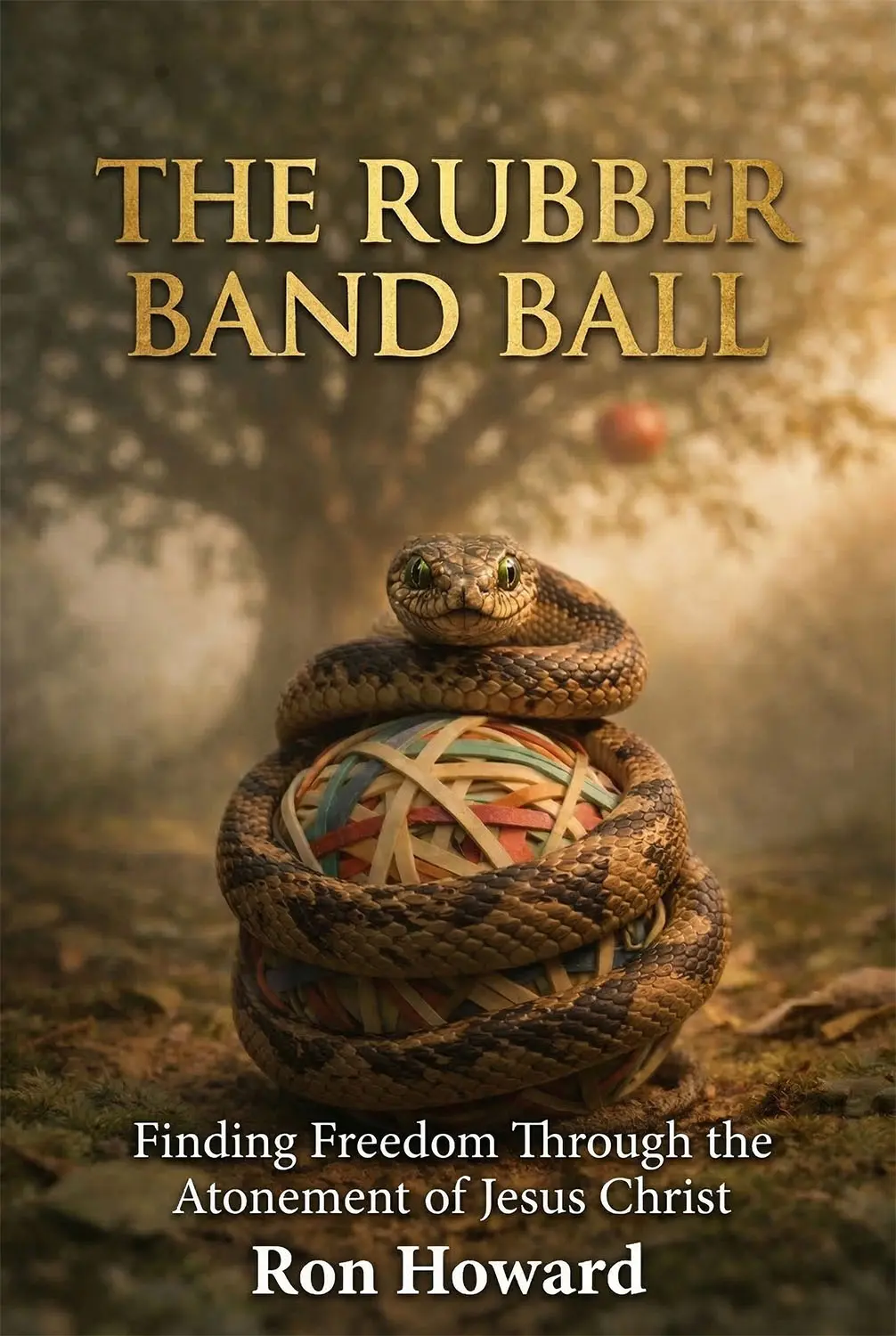
This is the actual mechanism. You are not what you did. You are not the accumulated record of your worst moments. You are what Christ declares you to be — and that declaration is not contingent on whether you feel it yet. The Five Surrenders process described in The Rubber Band Ball is built around this truth — the practical work of naming the false narrative, separating it from your identity, and surrendering it specifically enough that the release becomes real rather than theoretical.
When You Keep Bringing It Back Up
One of the most disorienting experiences for people who have worked through repentance is the return of the memory. They thought they had dealt with it. Months later, something triggers the memory and the old feelings surface — and they interpret this as evidence that they had not actually been forgiven, or had not actually healed, or had somehow lost the progress they had made.
The return of memory does not mean the return of guilt. A healed wound can still be touched. A scar exists even after full recovery. The fact that you can remember something painful does not mean the thing is still open, still unresolved, still requiring action on your part. Memory is not condemnation. The brain stores experience; that is what it does. The goal is not to erase the memory but to change your relationship to it.
When the memory comes back, the practice is simple in description and genuinely difficult in execution: acknowledge it briefly and redirect. Not denial — you are not pretending the thing didn't happen. You are choosing to live in the present tense of who God says you are rather than the past tense of what you did. This is the daily work that self-forgiveness actually requires. For more on how shame and guilt operate differently in this cycle, the piece on the difference between guilt and shame goes deeper into the mechanics.
The case is closed. God said so. The only question remaining is whether you will choose to honor that verdict, or keep returning to the courtroom to argue it again. Self-forgiveness is not the moment you feel light. It is the moment you decide to stop re-opening a closed case — and then decide again the next day, and the day after that, until the decision outlasts the feeling and becomes simply who you are.
Frequently Asked Questions
How do you forgive yourself in the LDS faith?
Forgiving yourself in the LDS faith begins with accepting that the Atonement of Jesus Christ is complete — not conditional on how long you punish yourself afterward. It requires separating the fact of forgiveness (which is God's decision) from the feeling of forgiveness (which comes over time). Self-forgiveness is less a feeling and more a decision to stop re-prosecuting a case that God has already closed.
Is it a sin not to forgive yourself?
While persistent self-condemnation after sincere repentance is not categorized as a formal sin, it does represent a kind of rejection of the Atonement's completeness. D&C 58:42 states that after repentance, "I the Lord remember them no more." To keep rehearsing what God has forgotten is to place your judgment above His.
Why can't I forgive myself even after repentance?
The most common reason people cannot forgive themselves after sincere repentance is that they are dealing with shame, not just guilt. Guilt is resolved by repentance. Shame — the deeper belief that you are fundamentally flawed — requires a different kind of healing. If repentance has been completed but the feeling persists, shame is likely the source.
What does the Book of Mormon say about self-forgiveness?
The Book of Mormon doesn't use the phrase "self-forgiveness," but Alma's account in Alma 36 captures the experience precisely. After crying out to Jesus Christ, Alma describes being "harrowed up by the memory of my sins no more." The release from self-condemnation was the direct result of surrendering to Christ — not of working hard enough to deserve relief.
How long does it take to forgive yourself after making a serious mistake?
There is no fixed timeline for self-forgiveness, and placing artificial deadlines on the process often adds shame to the existing burden. What matters more than timeline is direction: are you moving toward release, or continuing to return to the wound? Many find structured practices — like the Five Surrenders — help make the release concrete rather than indefinitely theoretical.
Can God forgive me for something serious?
According to Latter-day Saint theology, the Atonement of Jesus Christ covers every sin for which a person sincerely repents — with the single exception of the unpardonable sin, which is very specific and extremely rare. For the vast majority of human mistakes, including serious ones, the answer is yes: God can and does forgive completely.