
If thinking your way out of guilt and shame worked, you would have done it already. Most people who struggle with persistent guilt have thought about it thousands of times. They have reasoned with it, prayed about it, journaled about it, talked about it. And still it sits there. This is not a failure of intelligence or faith. It is a signal that thinking — as useful as it is — is not the right tool for this particular job.
Why Thinking Isn't Enough
The brain organizes. It categorizes, reasons, and makes sense of things. Thinking is extraordinarily useful for solving problems that have logical solutions. But guilt and shame — especially the kind that persists after repentance — are not logical problems. They are carried in the body as much as the mind. They live in the chest when you walk into church. They show up in the stomach when someone asks how you are doing spiritually.
No amount of reasoning removes something that lives in the body. You need an act — a physical, spoken, written act of release. The mind can acknowledge a problem endlessly without ever letting go of it. Acknowledgment and release are different movements, and only one of them actually sets something down.
Thinking organizes what you carry. A declaration sets it down. That distinction is the entire point of the Five Surrenders — they are not an attempt to understand your guilt better. They are an act of surrendering it.
What a Declaration Actually Is
A declaration is not a positive affirmation. Positive affirmations ask you to believe something better about yourself until the belief takes hold through repetition. A declaration is different — it is a statement of what is already true, spoken aloud, into the air, as a formal act of surrendering something's hold over you. The distinction matters. An affirmation says "I am worthy" and waits for you to believe it. A declaration says "This is not mine to carry" and releases it — regardless of whether you feel it in the moment.
Think of the difference between packing a bag and setting it down. Packing it, organizing it, cataloguing everything inside it — that is what thinking does. Setting it down is a different act entirely. The Five Surrenders are not a new way to think about your guilt. They are the act of setting it down.
This matters especially for people who have spent years trying to think or pray their way to relief. The process works not because it produces new understanding, but because it is an act — a deliberate, physical, spoken, written act of release. The act is the point.
Walking Through Each Declaration
The First Declaration — Acknowledge: You name specifically and honestly what you are carrying. Not a category ("my guilt about the mission") but a specific item ("the belief that I failed as a missionary because of what happened in week three"). Naming it specifically is the first act of release — it moves it from an ambient weight to a defined object you can set down.
The Second Declaration — Separate: You declare, out loud, that what you did is not who you are. "I made a mistake" is not the same as "I am a mistake." This declaration draws a line between the act and the identity. For people who carry shame rather than guilt, this is often the most powerful of the five. Shame lives in identity. This declaration strikes directly at it.
The Third Declaration — Release: You formally surrender this item to God through the Atonement. Not in a vague, hoping way — but as a deliberate act. "I am releasing this to You. I am no longer holding it as mine to carry." The Atonement was designed for this. The declaration is the act of accepting what it offers.
The Fourth Declaration — Write: You write it down in red ink. Ink, not pencil. Red, not black. This is not decoration. Writing makes the item external — it is now on the page, not in you. The red connects deliberately to the blood of the Atonement. You are not writing a reminder. You are writing a receipt. This has already been paid for.
The Fifth Declaration — Walk: You commit, in words, to walking forward without picking this back up. Not a promise that you will never struggle with it again — but a decision, in this moment, to take one step forward without the weight. The act of walking, even symbolically, matters. You do not have to feel free to choose to move.
What People Report Feeling After
The shift is usually not dramatic. People who expect a flood of emotion are sometimes disappointed. What most people describe is quieter: "lighter," "like I could finally breathe," "like the thing had a little less grip." Some people feel nothing in the moment and notice the difference the next morning, or the following Sunday, or when a conversation comes up that used to produce a familiar anxiety — and it doesn't.
Some people do the Five Surrenders multiple times for the same item. That is not failure. That is being human. The habit of picking something back up after setting it down is one of the most consistent things about us. The process was not designed to be a single cathartic event. It was designed to be a practiced act of release — and like any practice, it becomes more natural over time.
The goal is not a particular feeling. The goal is a particular act. Whether the release registers emotionally in the moment or in the days that follow, the act has been done. Something has been set down. That is what matters.
The Role of the Written Word in Scripture
It is worth noting that this emphasis on the spoken and written word is not arbitrary. Scripture is full of moments where speaking and writing carry weight beyond the content of the words — covenants made aloud, names written in books, declarations spoken in ordinances. The act of saying something out loud changes your relationship to it. The act of writing something down makes it real in a way that thinking about it does not.
The Five Surrenders use both — the spoken word to release the hold, the written word to mark the moment. Both matter. Neither is decoration. They are the mechanism of release — not merely the expression of a release that has already happened internally, but the act through which the release occurs. This is why you cannot simply think your way through the Five Surrenders. Thinking is not the act. The act is the act.
Frequently Asked Questions
Where can I find the Five Surrenders?
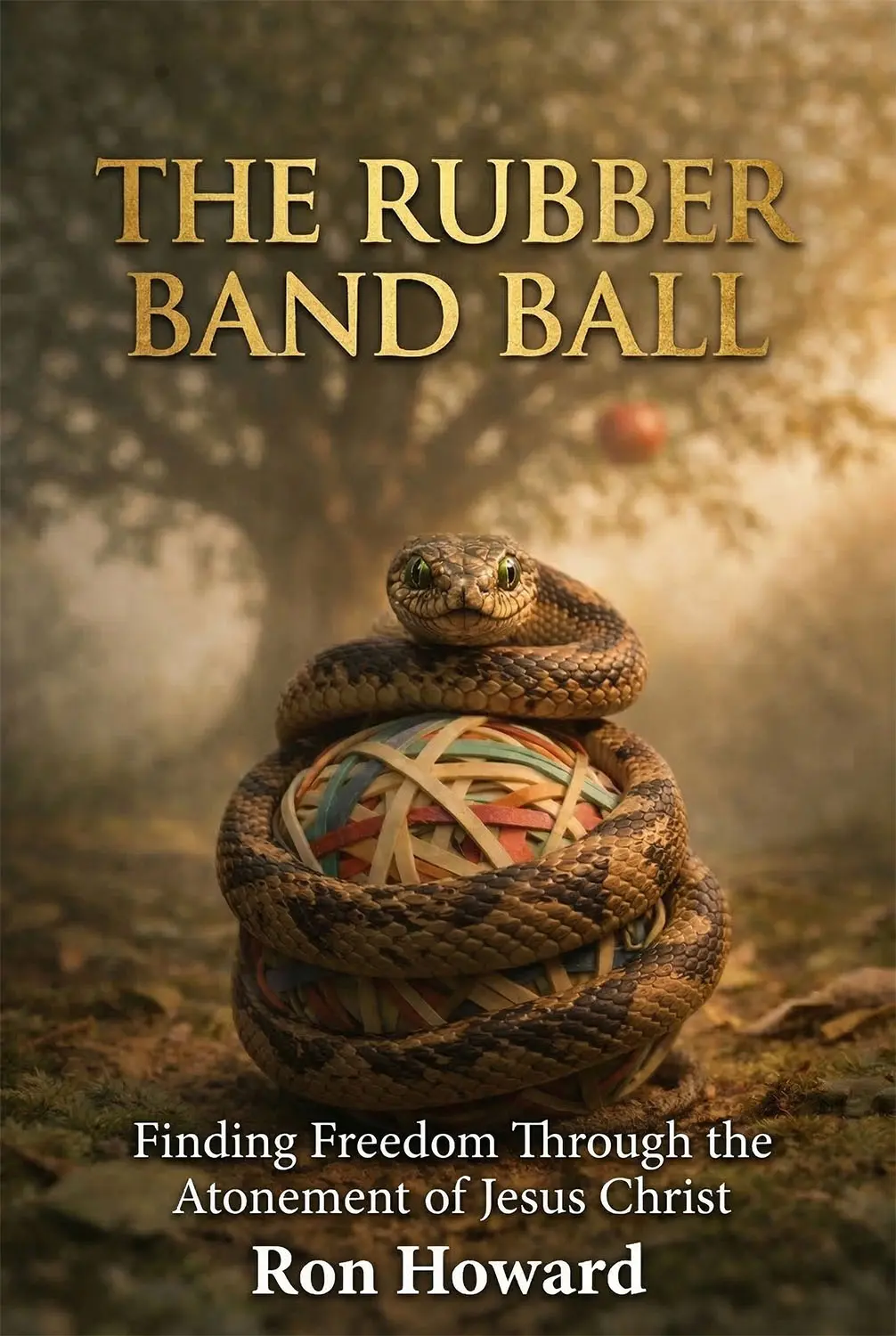
The Five Surrenders are described in full in The Rubber Band Ball by Ronald Howard, and a step-by-step walkthrough is available at therubberbandball.com/process. The complete process takes approximately fifteen minutes and requires only a pen, paper, and a willingness to be honest.
Do I have to do this with a bishop or church leader?
No. The Five Surrenders are a private practice you do on your own. They are not part of the formal LDS repentance process and do not require a bishop's involvement. They are specifically designed for the guilt and shame that persists after repentance has already occurred — the weight that formal church processes were not designed to address.
What if I don't feel anything when I do the Five Surrenders?
This is more common than you might expect. The Five Surrenders are not designed to produce a dramatic emotional experience. They are an act of release — and like many meaningful acts, the effect is sometimes quiet and cumulative rather than immediate. Many people notice a shift hours or days later rather than in the moment. The goal is not feeling something. The goal is doing something.
How often should I do the Five Surrenders?
As often as needed. There is no prescribed frequency. Many people return to the process multiple times for the same item — which is entirely appropriate. The habit of picking something back up after setting it down is one of the most human things there is. The Five Surrenders are not a one-time event. They are a practiced act of release.
Is this part of the official LDS repentance process?
No. The Five Surrenders are not part of official LDS doctrine or the formal repentance process. They are a personal practice developed by Ronald Howard based on his own experience with guilt and shame that persisted after repentance. Many people find them useful precisely because they address the emotional and identity dimensions of guilt and shame that formal repentance does not focus on.
The Full Process Is Here
The Five Surrenders are described in complete detail in The Rubber Band Ball. A step-by-step overview is available at therubberbandball.com/process.