
You read your scriptures. You attend every meeting. You fulfill your calling. You serve. And yet there is a persistent whisper that says: it is not enough. You are not enough. If that whisper is familiar, you may be living something the book calls performance-based faith — and it is one of the most common and most exhausting ways to follow Jesus.
What Is Performance-Based Faith?
Performance-based faith is the belief — conscious or unconscious — that God’s love, approval, and salvation must be earned through consistent spiritual effort, obedience, and productivity. It converts faith from a relationship into a performance review, where worthiness is always conditional on the last thing you did or failed to do.
In this framework, you are never quite current with God. Miss a day of scripture study and you are behind. Struggle in a temple recommend interview and you are unworthy. Lose your temper on a hard Tuesday and the whole week feels spiritually compromised. The tally is always running.
The clearest diagnostic question is this: when you fail spiritually, do you feel sad or do you feel afraid? Sadness is the grief of someone who loves God and missed the mark. Fear is the signal of someone whose standing before God is contingent on their last performance. One is repentance. The other is performance-based faith.
Where It Comes From
Performance-based faith rarely arrives by accident. It is often wired in early, through well-intentioned families, enthusiastic teachers, and a church culture that genuinely loves excellence. We learn early that gold stars are given for scripture mastery, attendance charts, and memorized Articles of Faith. These are not bad things. The problem emerges when the gold star model of spiritual development becomes the architecture of our relationship with God.
A child who receives love primarily in moments of achievement begins to associate obedience with worthiness — and worthiness with being loved. By adulthood, that equation runs silently in the background of every spiritual experience. This is not a blame piece. Most of the people who passed this pattern on were carrying it themselves, unexamined. It is an understanding piece. You cannot release what you cannot name.
The Signs You’re Living It
- You feel relief, not joy, after fulfilling your calling. The emotion is primarily “I am not behind” rather than gratitude or delight.
- A missed family prayer feels like a moral failure. Not a small disappointment — a character indictment.
- You measure your spiritual health by your last week. A strong week means God is pleased. A weak one means He is not.
- You feel vaguely behind no matter how much you do. The bar moves just ahead of whatever you accomplish.
- Religious practice feels more exhausting than sustaining. You are running toward something that never quite arrives.
- Hearing a conference talk about a spiritual habit you don’t do triggers shame, not inspiration. The predominant response is inadequacy, not invitation.
The Theological Problem
Performance-based faith has a specific theological error at its core: it inverts the relationship between grace and works. The Book of Mormon teaches that we are saved by grace “after all we can do” (2 Nephi 25:23). This verse is frequently used to justify the performance tally — as though grace only activates after enough effort has been logged. But the phrase “after all we can do” means something closer to “notwithstanding all we can do” — that is, grace covers what sincere effort cannot.
Moroni 10:32 sharpens this further: we are to “come unto Christ” and be perfected in him — not perfected by ourselves before we come to him. Works are meant to be the natural fruit of genuine faith, the overflow of a life oriented toward Christ. Performance-based faith inverts this, treating works as the root — the very thing that produces worthiness and unlocks God’s love. That inversion is not just exhausting. It is, theologically, a different gospel.
“You are not the ball. You are the one carrying it. And you were never meant to carry it alone.”
What Freedom Actually Looks Like
Freedom from performance-based faith is not a call to stop trying. It is an invitation to try from a completely different place. The distinction is between an identity grounded in Christ and an identity grounded in performance. One is stable. The other requires constant maintenance.
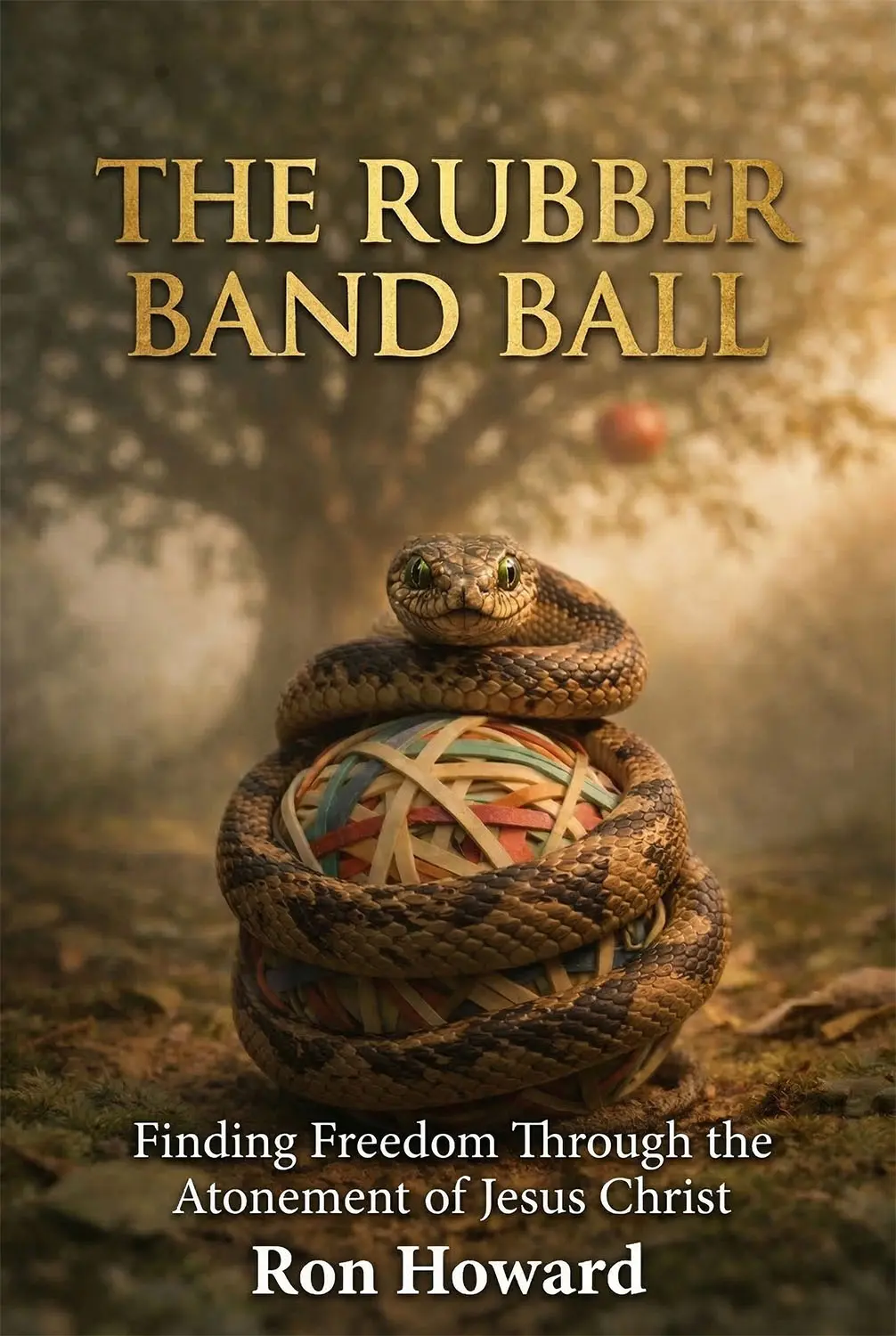
The rubber band ball metaphor captures this precisely. Each rubber band represents a belief, a burden, a rule wound tight around who you think you are. Performance-based faith adds bands. The Atonement removes them — not by lowering God’s standard, but by relocating the source of your worthiness from your output to His finished work.
The Rubber Band Ball walks through a practical, faith-based process for unwinding these beliefs one by one. If you want to understand the specific steps involved, explore the process here.
Frequently Asked Questions
What is performance-based faith?
Performance-based faith is the belief — conscious or unconscious — that God’s love, approval, and salvation must be earned through consistent spiritual effort, obedience, and productivity. It converts faith from a relationship into a performance review, where worthiness is always conditional on the last thing you did or failed to do.
Is trying to be obedient wrong?
Obedience itself is not the problem — the motive behind it can be. Obedience born from love and gratitude is healthy. Obedience driven by fear of losing God’s approval is performance-based faith. The test is simple: when you miss a day of scripture study, do you feel sad or do you feel afraid?
How do I know if I have performance-based faith?
Common signs include: feeling spiritually “behind” when you miss a meeting or scripture study, believing God is disappointed in you when you struggle, measuring your worthiness by your most recent behavior, and feeling exhausted rather than sustained by your religious practice.
What is the difference between works and performance-based faith?
Works are the natural fruit of genuine faith. Performance-based faith inverts this — it treats works as the root, the thing that creates worthiness. The Book of Mormon teaches that we are saved by grace “after all we can do” (2 Nephi 25:23), not that we earn grace through what we do.
Can the Atonement help with perfectionism and performance-based faith?
Yes. The Atonement of Jesus Christ offers not just forgiveness of sin, but a new identity that is not contingent on performance. In this framework, worthiness is not something you produce — it is something you receive and then live from.
How do I stop feeling like I’m never spiritually good enough?
Start by separating what you do from who you are. You are not your calling, your attendance record, or your most recent struggle. The Rubber Band Ball by Ronald Howard offers a practical, faith-based process for releasing performance-based identity and finding freedom through the Atonement. Free worksheets and downloads are available on the resources page.