
People tell you to give it to the Lord. Almost nobody tells you what “it” is. And that vagueness is precisely why the instruction so often produces nothing — you cannot hand over a general feeling of heaviness. You can only hand over specific things, one at a time, and to do that you first have to know what they are. That is what the list is for.
Why the List Exists
When I was serving as a bishop, young adults would come in carrying something. We would talk. We would pray. I would testify of the Savior, and they would often leave lighter.
And then, a few months later, many of them came back. Different issue. Same heaviness.
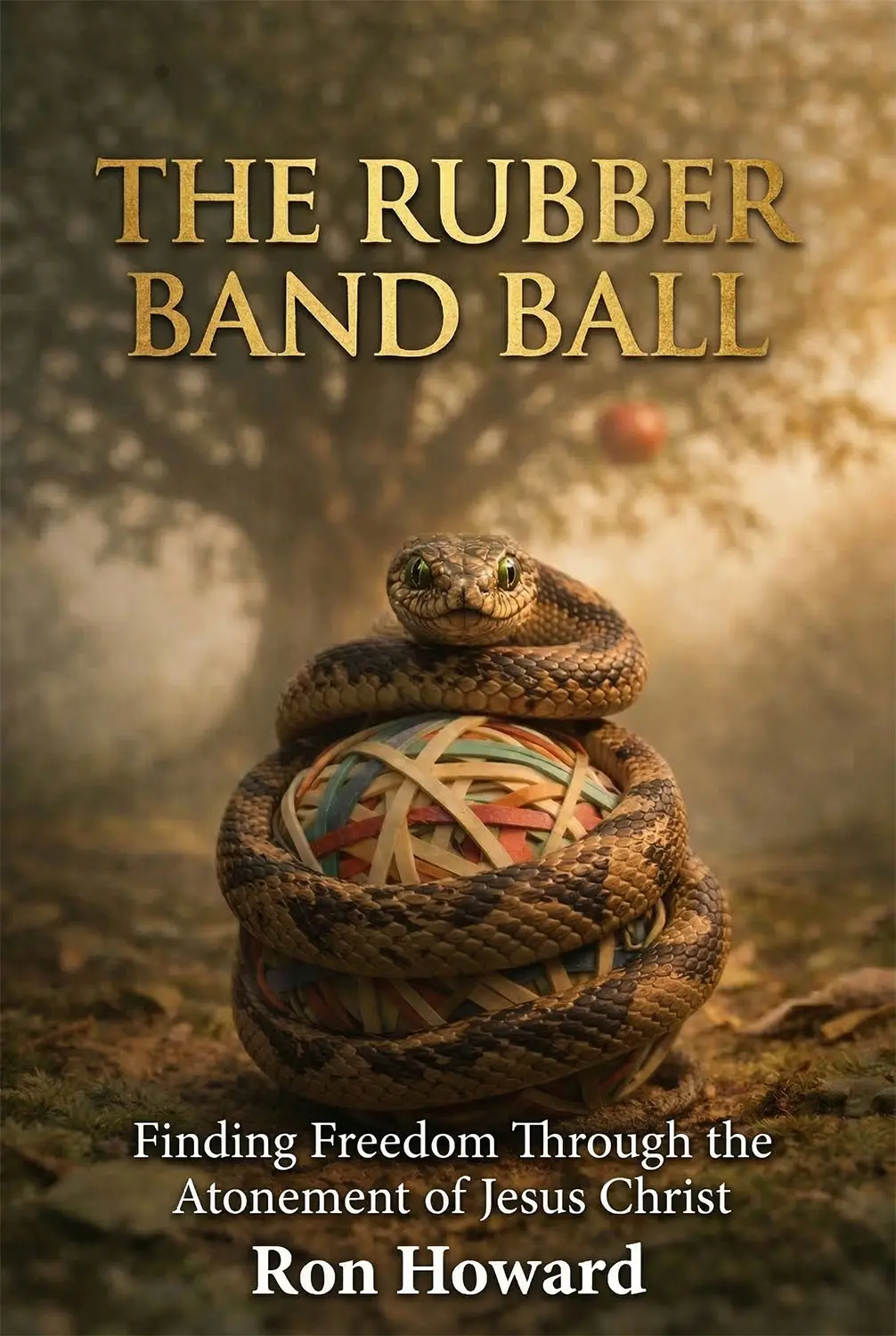
It was not one rubber band. It was a ball. And you cannot unwind a ball by addressing whichever strand happens to be on top this week.
So I built one. I gathered every rubber band I could find — different colours, different sizes, some thick and tight, some stretched thin, some cracked but still tangled into the mass. Layer after layer. By the time I finished it was the size of a volleyball. Awkward, heavy, unattractive, and it collected dirt from everyone’s hands.
I put it on my desk, and the next time someone came in I set it in their lap and said: this is what you are carrying. Not just what happened last week. All of it.
The Three Tests
An item belongs on your list if any one of these is true:
- If it still stings — write it. There is a physical component. You know the feeling.
- If it still brings emotion — write it. Anger, grief, embarrassment, dread. Any of them.
- If it still shapes how you react — write it. This is the sneaky one. Some items no longer hurt but still govern your behaviour: the topic you avoid, the person you will not be alone with, the opportunity you do not take.
That third test catches things the first two miss. Plenty of people have items that have gone numb but are still steering.
What Belongs on It
Wider than people assume. All of the following qualify:
- Things you did. Obviously.
- Things that were done to you. Just as much. Alma lists pains and afflictions alongside sin for a reason.
- Things you witnessed. You do not have to be the participant to be carrying it.
- Things you decided about yourself. Often the heaviest category and the one most often missed.
- Things that were said to you. A single sentence from a parent or teacher can wind a band that lasts fifty years.
- Things you never did. Regret over the road not taken is a genuine burden and it counts.
Mine included a kind remark from my mother. When I told her I was going to sell encyclopedias door to door she said, “Well, maybe someday you will get a real job.” She did not mean to wound me. It landed anyway, and something inside me wrapped. I will show you fuelled me for years — it built drive and ambition, and it also built a rubber band tied around my identity.
Rules for Writing It
- Do not curate. Write it even if it seems trivial. Especially if it seems trivial and still stings — that gap is information.
- Do not rank by severity. A comment in 1974 goes on the same list as the thing you have never told anyone. Significance is measured by whether it is still wound around you, not by how it looks from outside.
- Number them. It matters more than it sounds. Numbering makes the ball finite, and finite is survivable.
- Do not solve them while writing. The list is inventory, not treatment. Resist the urge to start processing item three while you are still finding item eleven.
- Expect it to take more than one sitting. Items surface for days once you start looking. Keep the paper somewhere you can add to it.
How Long Is Normal
There is no normal, and the number tells you very little.
Some people write four items. Some write forty. One young woman set a spiral notebook on my desk with one hundred thirty-six, numbered, beginning when she was eight years old. Some of them were a few words. Some were pages.
A short list is not evidence of a shallow life, and a long one is not evidence of a broken one. What matters is honesty. A list of six honest items will do far more than a list of sixty careful ones.
And if you find you cannot get started at all, begin with the last week. What has bothered you? Pull that thread and it will lead backward.
What Happens Next
Do not attempt to release the whole list at once. That is the most common mistake and it produces nothing, which then convinces people the process does not work.
Take one item. Write what happened, how it happened, how you felt, and what you believed about yourself afterward. That fourth question is where the binding usually is.
Then the transfer: the five surrenders, said and written, in red pen across the page until the words underneath are covered. The process page sets them out; free worksheets are on the resources page.
Then cross it off. The crossing off is not decoration. Watching the list shrink is part of how the ball stops feeling infinite.
Frequently Asked Questions
How do I know what belongs on the list?
Three tests: if it still stings, write it; if it still brings emotion, write it; if it still shapes how you react, write it. The third catches items that have gone numb but continue to govern behaviour — the topic you avoid, the person you will not be alone with, the opportunity you decline.
Should I include things that were done to me?
Yes. Things done to you belong on the list as much as things you did. So do things you witnessed, things that were said to you, conclusions you drew about yourself, and regrets about what you never did. Alma lists pains and afflictions alongside sin precisely because the Atonement addresses both.
How long should my list be?
There is no standard length and the number reveals little. People have written lists of four and lists of one hundred and thirty-six. A short list is not evidence of a shallow life, nor a long one of a broken one. Six honest items accomplish far more than sixty careful ones.
What if something seems too small to write down?
Write it anyway, particularly if it seems trivial and still stings — that gap between apparent size and actual charge is itself information. Significance is measured by whether something is still wound around you, not by how it appears from outside.
Why should I number the items?
Numbering makes the burden finite, and finite is survivable. An unnumbered sense of heaviness feels limitless; a list of nineteen items has an end. Crossing items off as they are released is part of how the ball stops feeling infinite.
What do I do once the list is written?
Take one item at a time rather than attempting the whole list at once. Write what happened, how it happened, how you felt, and what you believed about yourself afterward — that last question usually holds the actual binding. Then make the five surrenders in writing and cross the item off.