
You made covenants. You have a calling. You have been here for years. And there is still a moment most weeks where someone references a childhood Primary song, or a family tradition, or a grandparent who crossed the plains, and you feel the small distance again. Not unwelcome. Just — visiting. I want to name what is actually happening there, because most converts assume it is a personal deficiency, and it usually is not.
What You Are Actually Missing
Most of what you are missing is culture, not gospel — and the two are constantly mistaken for each other, including by lifelong members.
The songs, the shorthand, the in-jokes about green jello, the assumption that everyone knows how to run a ward activity, the pioneer ancestry, the sense of an extended family network that overlaps entirely with the congregation.
None of that is doctrine. None of it is required. And a good deal of it is regional — a member in Boise and a member in Manchester have quite different versions of the same church.
But it functions as belonging, which is why its absence registers as exclusion even when no one has excluded you.
The Two Different Losses
There are usually two things happening at once, and separating them helps.
The first is not having the history. You did not grow up with it, so there are references you will simply never have. That one is factual and permanent, and the honest response is that it is a real thing to grieve rather than a problem to solve.
The second is what you left. This is the one nobody asks about. Most converts gave something up — family relationships that cooled, a former community, holidays that are now complicated, sometimes a spouse or parent who has never accepted it.
The second loss is frequently much heavier than the first, and it is almost never acknowledged, because the conversion narrative in the Church is a story of gain. There is not much room in it for what it cost you.
What People Say Without Meaning Anything By It
- ”Converts are so strong — you chose it.” Kindly meant, and it also sets a standard you now have to maintain.
- ”You do not seem like a convert.” Intended as a compliment. Reveals that there is a way converts seem.
- ”How did you find the Church?” For the ninth time this year, often before your name.
- ”My family joined in 1847.” Not aimed at you at all. Still lands.
Almost none of this is malicious. That is precisely what makes it hard to raise — there is nothing to object to, so it accumulates without ever being discussed.
The Sentence Underneath
Somewhere in here a belief usually forms, and it is worth finding.
It sounds like: I will always be slightly outside this. Or: I have to work harder than they do to be counted. Or the one I have heard most often: If they knew what my life was before, they would think differently of me.
That last one is the heaviest, because it means a person is participating fully while privately expecting to be found out. It is exhausting in a way that is very hard to explain to someone who has never carried it.
And notice it is a covering, in the Genesis sense — fig leaves sewn to manage exposure. The problem is not that you have a past. Everyone in that building has a past. The problem is the belief that yours disqualifies you.
What Doctrine Actually Says About This
It is worth being specific, because the culture and the doctrine genuinely diverge here.
Romans 8:16 does not say the Spirit bears witness that we come from the right families. It says the Spirit bears witness that we are the children of God. That identity does not have a tenure requirement.
When Samuel went to anoint a king he assumed Eliab was obviously right, and the Lord corrected him: man looketh on the outward appearance, but the Lord looketh on the heart. Every metric making you feel like a guest is an outward one. Ancestry is outward. Fluency in the culture is outward.
Nothing in the covenant is provisional. There is not a category of member who has been admitted conditionally pending further review.
What to Put Down, and What to Simply Live With
Be honest about which is which, because treating them the same way fails at both.
Live with: not knowing every hymn from memory, missing some references, having a shorter history here. Those are facts. They will soften with time and they do not require solving.
Put down: the belief that your past disqualifies you. The sense that you are on probation. The private expectation of being found out. Whatever you concluded about yourself when a family member said something cruel about your decision.
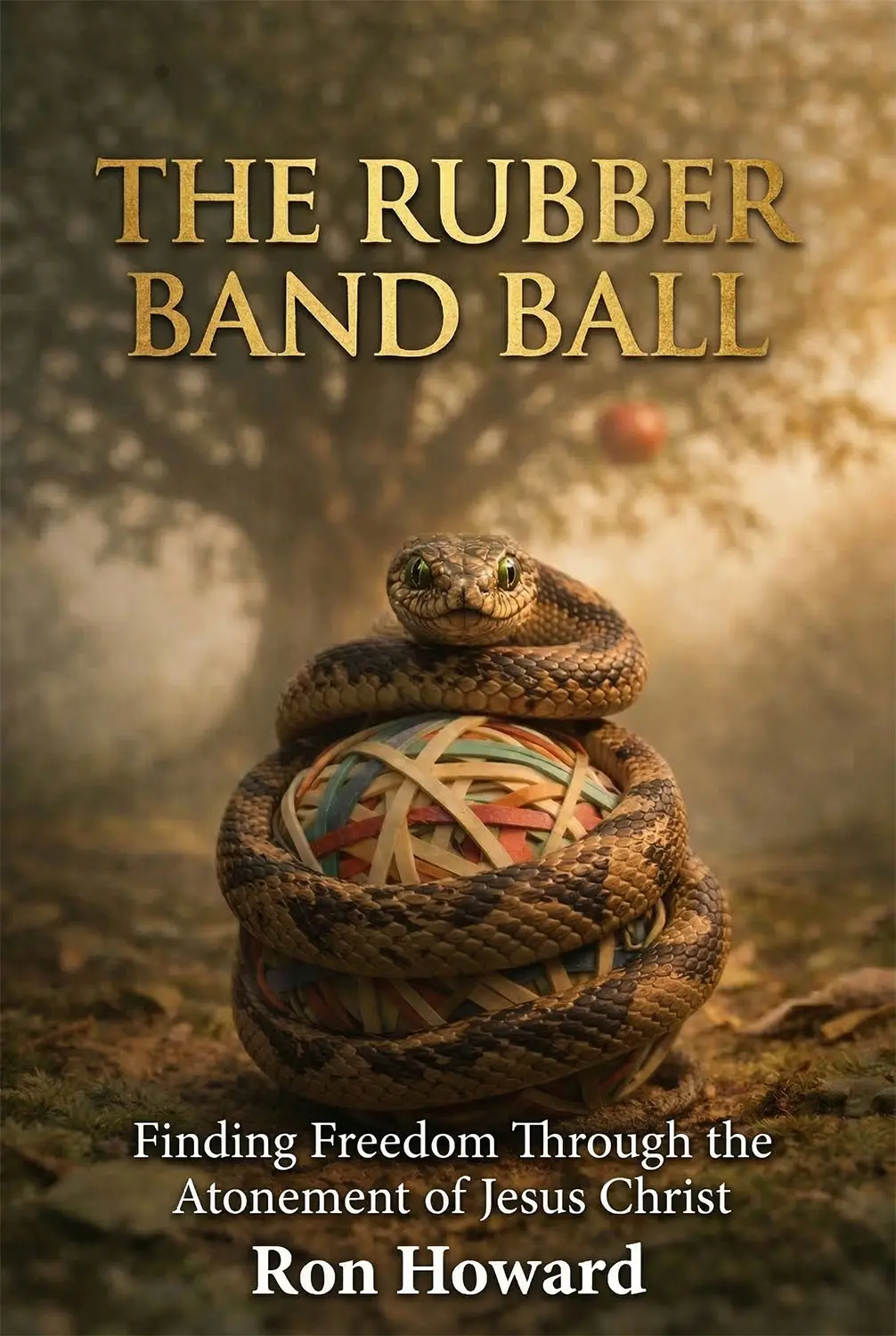
Write those out specifically — what happened, and what you concluded about yourself because of it. Then transfer them deliberately: the five surrenders, in writing. The process page sets them out; The Rubber Band Ball walks through the method.
“You are not what happened to you. You are not your worst moment. You are not even your greatest success. You are a child of God.”
One Thing Worth Knowing
A great many lifelong members also feel like guests. Different reasons — a doubt they cannot mention, a family that is not what it appears from the outside, a calling they are failing at privately.
The room is fuller of people managing a private distance than it looks. That is not a reason to stay quiet about yours. It is a reason to believe that saying it out loud, once, to one person, is far less risky than it currently feels.
Frequently Asked Questions
Why do I still feel like an outsider years after joining the Church?
Most of what converts are missing is culture rather than gospel — songs, shorthand, in-jokes, pioneer ancestry, overlapping family networks. None of it is doctrine or required, and much of it is regional. But it functions socially as belonging, so its absence registers as exclusion even when nobody has excluded you.
Is it normal to grieve what I left behind when I joined?
Yes, and it is usually the heavier of two losses. Most converts gave something up — cooled family relationships, a former community, complicated holidays, sometimes a spouse or parent who never accepted it. This rarely gets acknowledged because the conversion narrative is a story of gain with little room for its cost.
Does my past disqualify me from full membership?
No. Nothing in the covenant is provisional, and there is no category of member admitted conditionally pending review. Romans 8:16 places identity in being a child of God, with no tenure requirement. Everyone in the building has a past; the burden is the belief that yours is disqualifying.
Why do well-meaning comments about being a convert sting?
Because they quietly establish a category. “Converts are so strong” sets a standard to maintain, and “you do not seem like a convert” reveals that there is a way converts are expected to seem. None of it is malicious, which is exactly why it is hard to raise and why it accumulates undiscussed.
What should I accept and what should I release?
Accept the factual gaps — not knowing every hymn, missing references, having a shorter history. Those soften with time and need no solving. Release the belief that your past disqualifies you, the sense of being on probation, the private expectation of being found out, and whatever you concluded when someone was cruel about your decision.
Do lifelong members feel this way too?
Frequently, for different reasons — an unmentionable doubt, a family that is not what it appears, a calling they are privately failing at. The room contains far more people managing a private distance than it appears. That makes speaking about yours once, to one person, considerably less risky than it feels.