
Write It
In Red.
"Take a red pen. Cover the page with the five surrenders. Let it be messy. Let it be sacred."
What Forms a Rubber Band
Every rubber band starts with something real. Something that happened, or something you did. The ball grows when we try to carry it alone.
What We Did
Our own choices. The words spoken in anger. The moment we looked away. The sin we are still ashamed of. These are the bands we wound ourselves.
What Was Done to Us
The wounds someone else made. The words spoken over us. The abuse, the abandonment, the betrayal. We did not choose them — but we carry them still.
What We Could Not Fix
The unforgiveness we have held for years. The grudge that lives in the chest. We kept picking it back up because letting go felt like letting them win.
The Good News
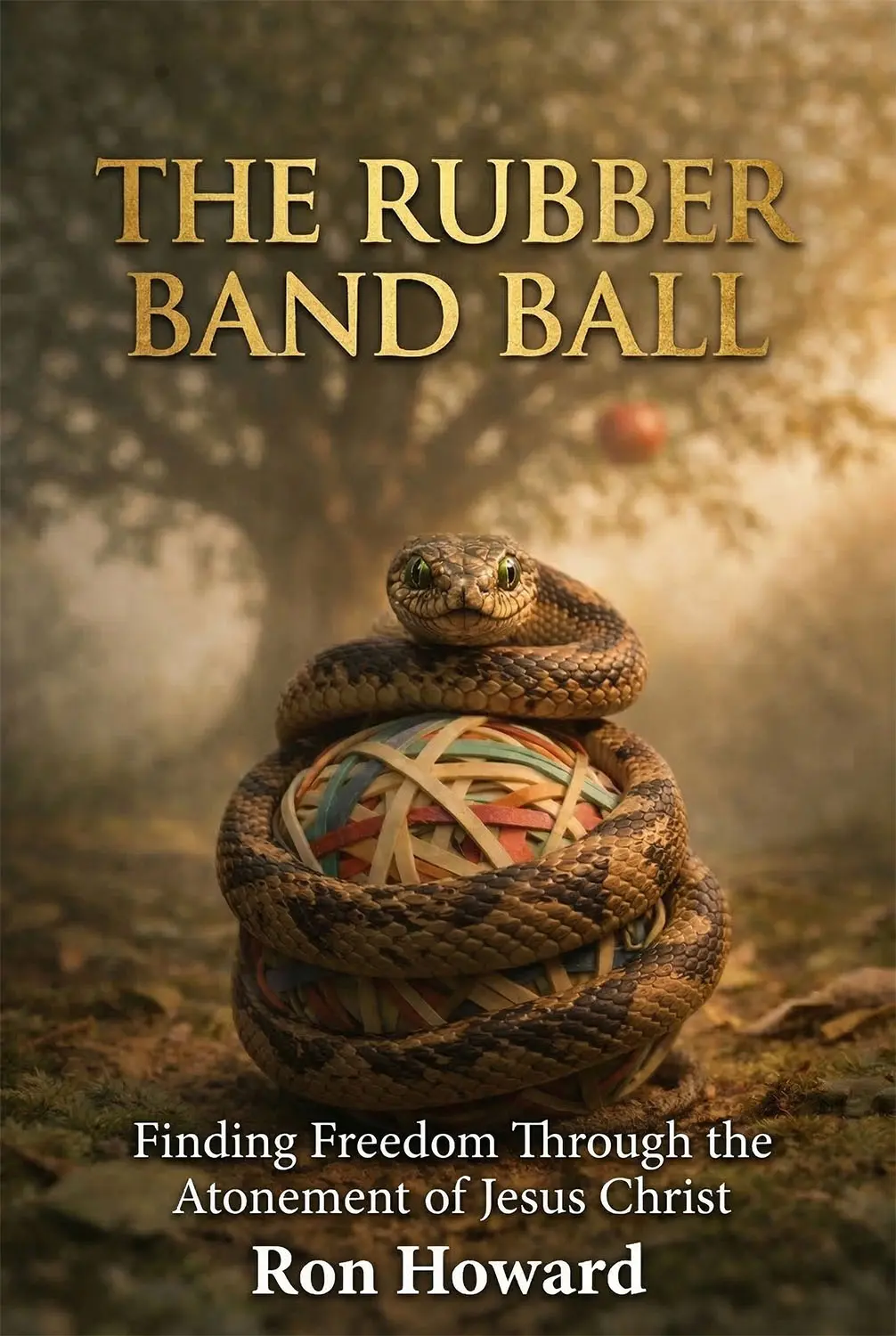
You are not the ball. The rubber bands are not you. They are things that happened. Things you did. The Atonement was designed for exactly this weight.
"You did not set out to build it. But you do not have to carry it forever."
Chapter 1, The Rubber Band Ball
The Five Steps
Work through each item on your list. Do not rush. Take one at a time. Be specific. The process only works when you name the thing clearly. This process is drawn from The Rubber Band Ball — reading the book first will give these steps their full weight.
Acknowledge
Sit down with a piece of paper. Write what is still alive inside you. Do not edit. Do not minimize.
- → If it still stings when you think of it, write it.
- → If it still brings tears or anger, write it.
- → If it still shapes how you see yourself, write it.
It cannot heal in the dark. If it lives inside you, it is still yours to name.
Work One at a Time
Pick one thing from your list. Only one. Do not try to release everything at once. The process requires presence — not speed.
On specificity
Do not write "my anger." Write the exact moment. The exact person. The exact thing that was said or done. Vague wounds cannot receive specific healing.
Make the Five Surrenders
Speak these aloud. Not in your head. Out loud, in your own voice. These are not symbolic. They are transfers of ownership.
-
I.
"I give this to the Savior."
-
II.
"I forgive myself."
-
III.
"I forgive the offender."
-
IV.
"I let this go."
-
V.
"I won't pick this up again."
Write It In Red
Take a red pen. Write the five surrenders directly over what you wrote in step one. Bold, messy, real. Let the red words cover the wound.
"Let it be messy. Let it be sacred."
I am still angry about what they did to me.
"I give this to the Savior."
I don't think I can ever forgive myself for this.
"I forgive myself."
The weight feels too heavy to carry alone.
"I will not pick this up again."
Scroll to reveal the declarations
Walk Forward Clean
The memory will return. It always does. That is not failure — that is not you picking it back up. That is simply a memory.
This is not
Suppression. You are not pretending it did not happen. The event was real. The wound was real. The healing is also real.
When it returns
Say the declarations again. Quietly, if needed. You are not starting over — you are simply reminding yourself of what is already done.
"You do not have to live with it forever."
Weekly Check-In
These four questions are designed to be revisited regularly. Use them in your journal, before church, or whenever the weight feels heavy again.
Your answers are private — nothing is saved.
What am I still carrying that I claimed to have released?
Is there a person I have not yet forgiven — including myself?
Where am I trying to fix what only the Savior can heal?
What do I need to write in red this week?
A Young Single Adult — Chapter 9
"I thought I would just have
to live with it."
She had carried the same rubber band for eleven years. She described it as background noise — always there, coloring everything. She had tried therapy. She had tried time. She had prayed that it would fade.
It did not fade. Until she wrote it down and covered it in red.
"I walked out of the bishop's office feeling lighter than I had felt since I was a child. Not because anything had changed about what happened. But because I had finally stopped carrying it."
You Are Not
The Ball.
The Rubber Band Ball is available in print, digital, and audio. Ron believes this message should reach everyone who needs it — which is why the digital and audio editions are completely free.
"The Atonement should be available to everyone."
Ronald Howard
Frequently Asked Questions
What is the Five Surrenders process? +
The Five Surrenders is a five-step process from the book that helps you identify, name, and release the specific burdens you carry. You acknowledge the weight, declare your identity in Christ, write it in red (symbolizing the Atonement), receive the exchange, and walk forward as someone who has been made clean — not just forgiven.
What does "write it in red" mean? +
"Write it in red" is a symbolic act in Step 3. You write what you've been carrying — the shame, guilt, or false identity — and then write over it in red ink, representing Christ's atoning blood. The visual act helps make the abstract exchange real. Isaiah 1:18 is central: "Though your sins be as scarlet, they shall be as white as snow."
How long does the process take? +
The Five Surrenders can be completed in about 30 minutes. Most people find the hardest part is Step 1 — honestly naming what they've been carrying. Once that's on paper, the remaining steps move naturally. Many people return to the process multiple times as new layers surface.
Is this a replacement for repentance or counseling? +
No. The Five Surrenders is not a clinical therapy tool and does not replace the repentance process. It addresses a different problem: the shame and false identity that often remain after repentance has already occurred. Many people who have fully repented still carry the weight — this process is for them.
Do I need to read the whole book first? +
The process is most effective after reading the book, because the earlier chapters explain why you're carrying what you're carrying. Without that context, the declarations can feel mechanical. The book builds to the process — so it's worth reading it in order before sitting down to complete the five steps.
Can I do this with someone else or in a group? +
Yes — many bishops and leaders walk through the Five Surrenders with members in a counseling setting. The free Leader's Guide includes instructions for facilitating the process one-on-one or in a group. The writing portions are personal, but the declarations themselves can be spoken aloud together.