
Surrender is a word with baggage. It suggests losing, giving up, going limp. So when people are told to surrender something to God, they hear an instruction to stop caring about it — and either they refuse, because caring is the right response, or they attempt it and find they cannot manufacture indifference. Both outcomes come from the same mistranslation.
What It Is Not
Clear the ground first, because most of the difficulty here is definitional.
- Not resignation. Resignation says nothing can be done. Surrender says something can be done, by someone else, and it has been.
- Not passivity. You are not being asked to stop acting. In most cases you will act more, and more clearly.
- Not pretending it does not hurt. Christ does not minimise pain; He heals it. Both require honesty.
- Not a feeling. You are not trying to arrive at peace and then declare it done.
- Not forgetting. You will remember. Memory is not ownership.
That last distinction is the one that trips most people. They surrender something, remember it a month later, and conclude it did not take.
What It Is
Surrender is a transfer of ownership. It is moving something out of your hands and into Christ’s — where, in most cases, it had already been paid for.
That is why it can be commanded, and why it does not depend on how you feel while doing it. Ownership is a matter of fact rather than sentiment.
And note the direction. You are not throwing something away, which is what “letting go” often implies. You are handing it to someone. There is a recipient. The transaction is between two parties, one of whom has already covered the cost.
Why It Has to Be an Action
Here is where most attempts fail, and the failure is mechanical rather than spiritual.
People try to surrender internally — thinking about it, deciding to feel differently, praying generally about a general burden. It does not hold, and then they conclude the doctrine is not real.
The trouble is that a thought is very difficult to distinguish from all the other thoughts you have had about the same subject. You have been thinking about this for years. Another round of thinking, however sincere, does not register as different.
That is why it gets written. Not because paper is holy, but because writing is an event. It happened at a time, in a place, in a form you can point to afterward. When the thing comes back at two in the morning, you are not relying on a memory of having felt resolved. You are referring to a decision you made in writing.
The Five Surrenders
The mechanism is five statements, said and written literally over each item:
- I give this to the Savior. The transfer itself. Naming a recipient.
- I forgive myself. The one people skip. Most burdens include a verdict you passed on yourself.
- I forgive the person or organization. Release, not exoneration.
- I let this go. A statement about the present.
- I will not pick this up again. A statement about the future, and the one that matters most later.
Then a red pen, writing those declarations across the page over what you wrote, until the words underneath are covered.
The ink smears. Tears fall. The paper wrinkles. It is never neat. Surrender that costs nothing tends to hold nothing.
Why the Fifth One Exists
The fifth declaration is not decorative, and it is the one people understand only later.
Weeks or months after a genuine surrender, something will surface — a location, a name, a familiar feeling. Most people panic. I suppose it did not work.
But memory is not ownership. The Savior does not return burdens. Only we do.
So the fifth declaration is a decision made in advance about that moment. When the memory returns, you do not relive it, renegotiate it, or re-feel it. You say plainly: that has already been given to Christ. You are not arguing with it — you are declining an invitation.
“The Savior does not return burdens. Only we do. And you do not have to.”
What Surrender Does Not Remove
Pressure. Let me be plain, because over-promising here has damaged people’s faith.
Bills still come. Deadlines still come. Criticism still comes. Sin still comes. Failure still comes.
What changes is what pressure means. Before surrender, pressure feels personal — it lands on identity and gets read as a verdict. After surrender, pressure becomes a question: is this mine to carry?
That one question prevents most new rubber bands. Some burdens are assignments and some are not, and being able to tell the difference is most of what a settled person has that an exhausted one does not.
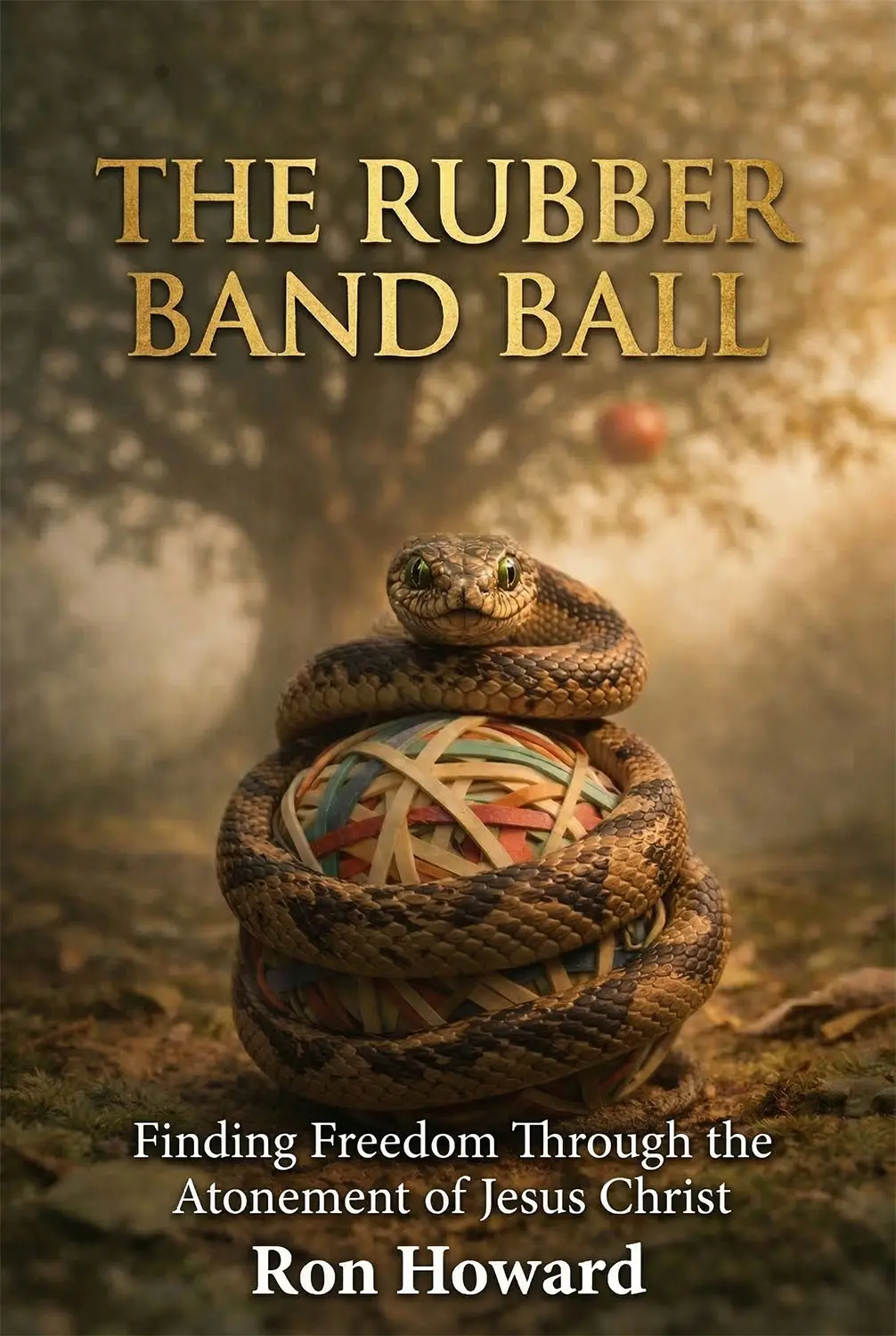
The process page sets out the steps, and The Rubber Band Ball walks through the method with examples. Free worksheets are on the resources page.
Frequently Asked Questions
What does spiritual surrender actually mean?
It is a transfer of ownership — moving something out of your hands and into Christ’s, where in most cases it had already been paid for. It is not resignation, passivity, pretending something does not hurt, a feeling, or forgetting. Because ownership is a matter of fact rather than sentiment, it does not depend on how you feel while doing it.
Is surrender the same as giving up?
No. Resignation says nothing can be done; surrender says something can be done, by someone else, and it has been. Most people act more clearly after surrendering rather than less, because decisions stop being made from inside the injury.
Why does surrender have to be written down?
Because a thought is difficult to distinguish from all the other thoughts you have had on the same subject over years. Writing is an event — it happened at a time, in a place, in a form you can point to. When the burden returns later, you refer to a decision made in writing rather than to a memory of having felt resolved.
What are the Five Surrenders?
I give this to the Savior; I forgive myself; I forgive the person or organisation; I let this go; I will not pick this up again. They are written in red pen across the page over what you wrote, until the original words are covered. The second is the one most often skipped, since most burdens include a verdict passed on yourself.
Why does the fifth declaration matter so much?
Because weeks or months later a memory will resurface and most people conclude the surrender failed. Memory is not ownership, and the Savior does not return burdens. The fifth declaration is a decision made in advance about that moment — you decline the invitation rather than reliving, renegotiating, or re-feeling it.
Does surrendering remove pressure from my life?
No. Bills, deadlines, criticism, sin, and failure still come. What changes is what pressure means. Before surrender it lands on identity and reads as a verdict; afterward it becomes a question — is this mine to carry? That question prevents most new burdens from forming.